News
Energy Transition and Industry: a Technical and Cultural Opportunity
Why the energy transition is a real need for industry
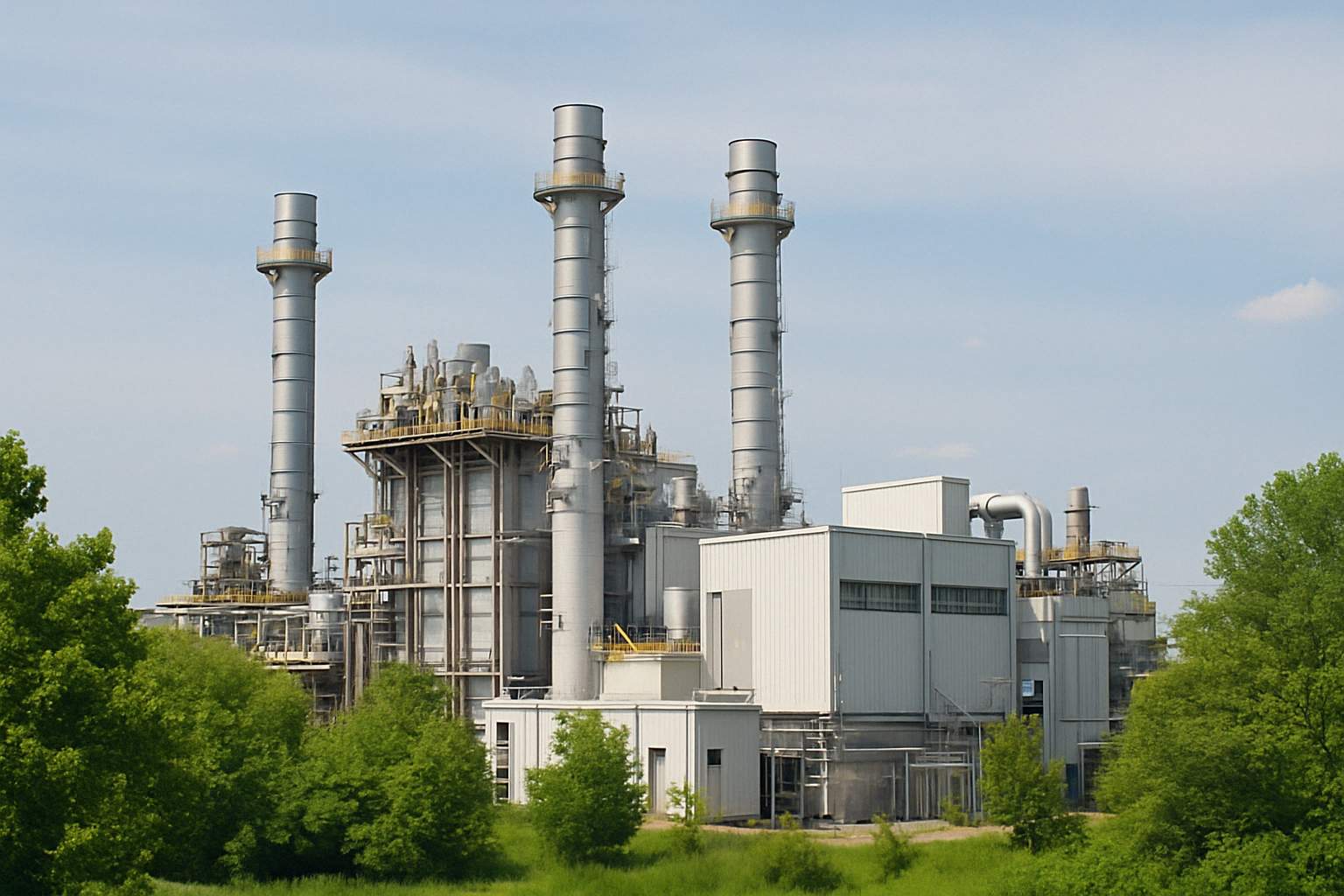
The energy transition is one of the most important challenges for industry in 2025 and for the years to come. It is not just a question of responding to increasingly stringent environmental regulations, but of tackling structural change involving design, production and competitiveness. In this context, industrial engineering plays a key role.
Energy enterprises and pressure on consumption
The energy transition involves all energy-intensive realities: from manufacturing, very widespread in Italy, to the sectors of steel, chemistry, ceramics, cement works, glass and waste treatment. In these contexts, energy management is a central element of business strategy.
Companies operating with complex, continuous and high absorption plants face operational challenges that require consistent and scalable technical solutions. High costs and the need for continuity of production require a rigorous approach to plant design.
Environmental standards and technical requirements
The European regulatory framework sets concrete targets for reducing emissions and increasing efficiency. The energy companiesIn order to remain in line with the directives, they must incorporate sustainability criteria already in the technical design phase.
In particular, compliance with the new consumption thresholds and adherence to emission trading systems require a review of existing infrastructure, with particular attention to industrial automation plants and logics.
Energy efficiency and electrical design
A industrial electrical system well designed to reduce consumption, stabilise the internal network and improve operational reliability. Energy efficiency is built from the earliest stages of electrical design, carefully evaluating power distribution, load control and energy quality.
In this process, the synergy between plant design and Industrial automation is essential: the two disciplines must work in a coordinated way to ensure continuity, adaptability and ease of monitoring.
Sustainability as a technical criterion
In the current context, sustainability has a precise technical value.
A plant is sustainable when it reduces waste, simplifies maintenance, allows evolutionary updates and integrates with the production system.
Sustainable design also means preparing the infrastructure for active energy management, based on continuous monitoring, punctual flow measurement and dynamic load regulation. This approachrequires accurate plant design, traceable and oriented to the duration and evolution of the plant over time.
Cross-cutting skills and engineering culture
Theindustrial engineering It must operate in a technical context where regulatory requirements, production requirements and environmental objectives need to be managed in a coherent manner. The designer may no longer work for separate compartments: We need an integrated vision that combines electrical, mechanical and control knowledge.
This approach is directly reflected in quality of electrical design and the functionality of the entire industrial electrical system, which must respond not only to immediate needs, but also to medium- to long-term evolutionary scenarios.
Plant adaptation and production reliability
Theintervention on existing installations for energy efficiency purposes enables companies to reduce operating costs, increase reliability and improve cargo management. In energetic contexts, even small design improvements can generate significant savings over time.
Theadaptation of an industrial electrical system does not necessarily involve the complete replacement of infrastructure: It is often enough to intervene in a targeted way with updated control logics, redefining, optimization of distribution or revision of automated cycle management.
Emmetitech’s contribution to electrical design for energy efficiency
As part of the energy transition path, Emmetitech supports companies in the electrical design of industrial plants focus on efficiency, safety and operational continuity.
The approach integrates technical, regulatory and plant skills, with the aim of creating reliable electrical systems, optimized and consistent with production needs. The design is developed in synergy with the customer's technical departments, using advanced software tools and updated standards.