PLC, SCADA and HMI software development for automation
EmmeTiTech has been constantly engaged in software development for PLC, SCADA, HMI and innovative solutions able to control, monitor and optimize industrial processes within plants, factories and other manufacturing structures.
Our software development services for industrial automation
We specialize in software development for PLC, SCADA and HMI for industrial automation. Our solutions are designed to adapt to your specific business needs and objectives. Here are some of the services we offer:
We develop custom PLC (Programmable Logic Controller) programs to automate and control industrial processes. Our experienced programmers create logical sequences, manage input and output signals and integrate advanced communication protocols.
We create SCADA (Supervisory Control and Data Acquisition) systems that allow you to monitor and control your industrial processes in real time. Our SCADA systems offer intuitive views, customizable alarms and detailed reports.
We design intuitive and easy-to-use human-machine interfaces (HMIs) that allow operators to interact with systems efficiently. Our HMIs provide clear information, intuitive commands and graphical representations of processes.
Our solutions allow the integration of data from different sources and processes. This allows you to have a complete view of your industrial activities and make informed decisions.
The automation solutions we develop allow you to monitor and manage industrial processes remotely. This offers flexibility and the possibility to intervene in a timely manner if necessary.
From software/hardware system design to plant commissioning
We follow our customers to 360°, from the design phase of the PLC, SCADA, HMI software/hardware system to the commissioning of the system. This path is steeped in competence, innovation and dedication, ensuring excellent results at every stage:
It all starts with a vision. Our experienced engineers and designers work closely with customers to understand their needs, objectives and challenges. With this base, we design a customized industrial automation system that adapts perfectly to the specifications of the plant and operations. This phase includes system architecture definition, software design, hardware component selection and man-machine interface planning.
With the design in hand, we enter the development and implementation phase. Our programmers and engineers turn concepts into reality, writing software code, configuring hardware devices and creating control interfaces. This crucial step ensures that the automation system responds reliably and accurately to the needs of the plant.
The automation development activity is accompanied by detailed documentation on operating specifications, flow charts and operator manuals.
Quality is our priority. We will conduct rigorous and detailed tests to ensure that the automation system works smoothly. During this phase, we will identify and solve any problems or inefficiencies. Optimisation is essential to ensure that the system reaches maximum performance in terms of efficiency, reliability and safety.
It's time to see our work come to life. During the commissioning phase, the automation system is integrated into the system and tested in real conditions. We also offer training to your operators and technical staff to ensure that they are able to use the system effectively and safely.
Our commitment does not end with putting into service. We offer continuous support to ensure that the automation system works optimally in the long run. This includes preventive maintenance, remote assistance and software update in response to the changing needs of the industry.
Some examples of installation or solution implemented by us
Following is a list of PLC, SCADA and HMI systems that we have implemented in recent years:
Software Development Environments for Automation
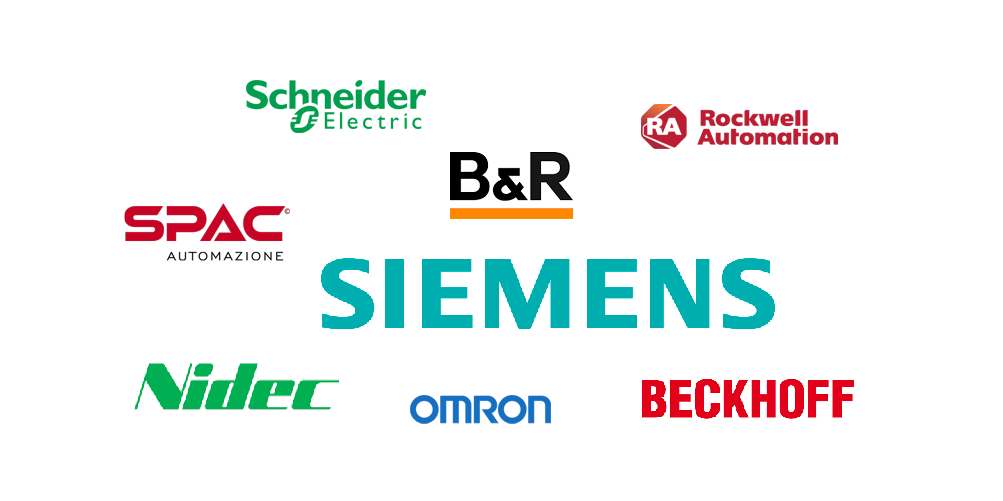
Our technicians are able to program in any development environment owned by the Customers, developed in different programming languages, in the timing and in the required modes. Following are some of the main development environments in which we operate:
Want to know more about our automation software service?