News
Industrial Cognitive Robotics: Technologies and Scenarios

TheIndustrial automation is entering a new evolutionary phase, driven by the need to make production systems increasingly intelligent, adaptive and integrated with the operating environment.
In this context, the Industrial cognitive robotics represents a concrete and strategic perspective for the factory of the future.
This evolution complements traditional mechatronics with new perception, learning and autonomous decision skills, with a direct impact on flexibility, security and operational continuity.
Beyond conventional robotics: stability and repeatability
In current production lines, le automated islands and robotic systems classics offer solidity, reliability and precision.
They perform repetitive tasks consistently, optimizing cycle times and minimising errors. These systems, based on deterministic logic and predefined interactions, form the pillar of consolidated automation.
Industrial cognitive robotics: perception, adaptation, collaboration
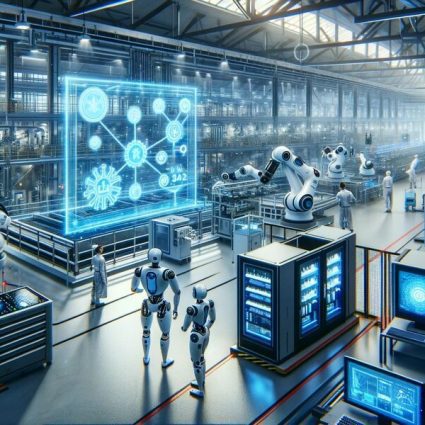
Industrial cognitive robotics expands the functionality of automated systems thanks to advanced sensors, artificial intelligence, edge computing and human-machine interaction (HRI). These systems are not limited to execute predefined commands, but are capable of:
- Detect and interpret environmental stimuli in real time;
- Learning from data to adapt operational strategies;
- Working with human operators, recognising the context and acting flexibly
Already tested in sectors such as aerospace and advanced logistics, this technology is also establishing itself in productive contexts characterized by high mix and low repeatability, where variability is the norm.
Designing systems for evolution today
The introduction of industrial cognitive robotics requires plant design modular, scalable and predisposed for new control logics, smart grids and perceptive components.
An evolutionary design approach includes:
- Scalable electrical panels for intelligent sensors and edge devices
- Flexible control architectures, integrated with adaptive algorithms
- Logic supervision capable of managing data, events and decisions dynamically
This approach reduces future adjustment costs and allows the integration of cognitive systems without invasive intervention.
Industrial engineering as a processing lever
The transition to intelligent systems requires robust and adaptive infrastructure, designed to integrate safety, traceability and up-to-date.
From the design stage it is necessary to consider the factory requirements of the future, in which the interaction between man and machine will be more sophisticated and oriented to joint efficiency.
Industry 5.0 and cognitive systems: strategic convergence
The vision of Industry 5.0 promoted at European level, it focuses on sustainability, resilience and enhancement of the human role.
Industrial cognitive robotics fits fully into this perspective, encouraging intelligent collaboration and operational adaptation.
In order to achieve these objectives, it is necessary today to prepare the technical conditions for its implementation: intelligent systems, integrated software and long-term-oriented design logic.
Towards cognitive implants
Evolution towards cognitive robotics requires systems designed to accommodate intelligent sensors, adaptive algorithms and flexible operating modes.
Planning this evolution today means guaranteeing operational continuity, reduce future costs and accelerate the adoption of advanced technologies when they reach maturity and industrial diffusion.