
News
The Mass at Norma of Industrial Machinery (according to Italian and EU regulations)
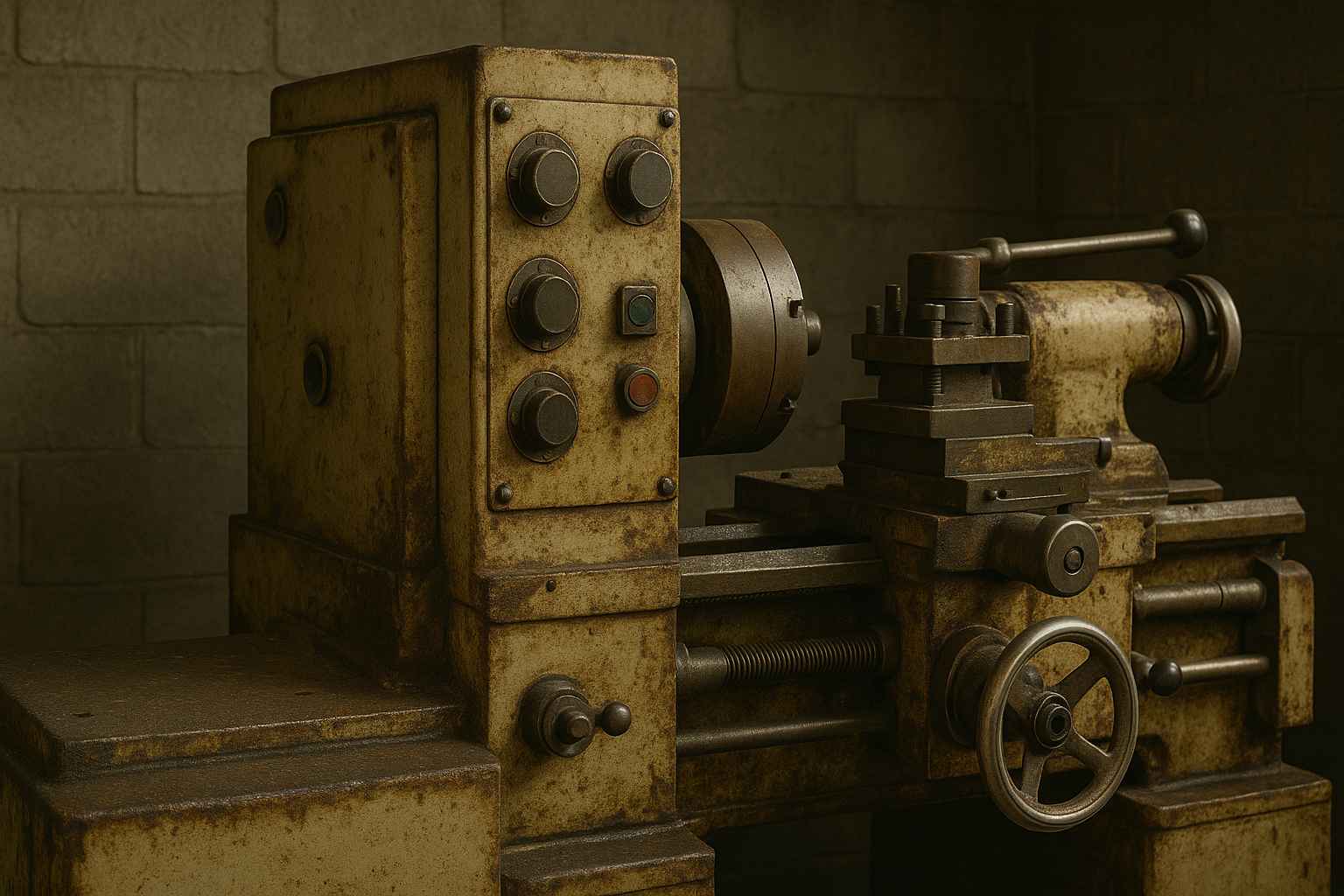
In many Italian companies machines installed decades ago are still in operation, often without CE marking or incomplete documentation. These plants, while remaining productive, pose significant risks to operator safety and legal responsibility for the organisation.
The Industrial machinery is the path that allows to adapt the equipment to the standards provided by European and national regulations, guaranteeing safety, operational continuity and legislative compliance.
The situation of industrial machinery in Italian plants
The industrial machine park in Italy is extremely heterogeneous: next to modern and digitalized systems, many machines installed between the Seventies and Nineties continue to be used. Lathes, presses, milling machines, saws and packaging lines remain in operation because they are reliable, damped and often adapted to production needs.
This longevity, however, brings with it recurring criticalities that impact security and compliance. To guide the initial diagnosis, here is a synthetic picture:
| Criticality | What it means |
|---|---|
| No CE marking (pre-1995 or never adequate) | Lack of basic conformity requirement |
| Incomplete/absent technical documentation | Unupdated file, unrecoverable user manuals |
| Old or ineffective protections | Repairs and devices not aligned to current standards |
| Dated electrical installations (CEI/IEC) | Non-compliant panels, inadequate wiring, no redundant safety circuits |
| Substantial amendments not certified | Changes in original safety conditions |
The problems vary by sector: metalmechanic robust but outdated machine tools persist;food/packaging adapted lines do not always meet all requirements; in chemical/pharmaceutical mainly documentary gaps emerge; in the wood and plastic often lack effective protection systems. The practical result is the use of production machines but not fully compliant: the risk for operators increases, the probability of Stops under inspection and intensifys the direct liability of the employer. For this reason, standardisation should be considered as a strategic priority.
What is the standardization of industrial machinery
Standardisation includes technical, documentary and organisational activities designed to bring the machine back within the existing safety requirements. Path is not standard: yes modulate depending on the age, status and characteristics of the plant. To avoid misunderstandings, we distinguish the most used terms:
| Term | Description | Practical examples |
|---|---|---|
| Security | Minimum measures to reduce immediate risks | Emergency buttons, temporary barriers |
| Adaptation | Specific weaknesses without structural changes | Photoelectric barriers, repair replacement |
| Revamping | Technological renewal of components/systems | New electric panel, motors/efficient drives |
| Retrofit | Integration of technologies on existing installations | Safety PLC, HMI evolved, remote monitoring |
The standardisation may include one or more of these actions with a dual objective: compliance and risk reduction, preserving efficiency and productivity.
When an industrial machinery is considered non-compliant
The "Non-compliance" not only depends on age: recent plants may also be irregular if they do not have up-to-date certifications or if modified without a new evaluation. In this section a list pointed is functional, because it makes immediate prior control:
- absence of CE marking (typical of machines built before 1995 or placed on the market without certification);
- technical documentation incomplete or missing (technical dossier, user manual, EC declaration);
- protectors absent or impaired (carters, barriers, emergency arrests);
- electrical installations non-compliant (dated panels, inadequate wiring, lack of redundant safety circuits);
- substantial changes uncertified (power increase, new operating units, integration into complex lines).
Regulatory references:
Legislative Decree 81/2008 (use of safe equipment) and Machinery Directive 2006/42/EC / Regulation (EU) 2023/1230 (essential safety requirements and marking for machinery placed on the market). Even one condition is sufficient to make compliance necessary.
Regulatory obligations and responsibilities of the employer
Machine safety is a responsibility shared: the manufacturer/importer shall ensure the conformity of the machinery placed on the market; the user, i.e. employer, must ensure that the machinery in use is safe, regardless of the year of construction. Here a table helps to see clearly the roles:
| Subject | Obligations |
|---|---|
| Manufacturer / Importer | Compliance with essential safety requirements; technical and user manual; CE marking and declaration of conformity |
| Employers | Verification of machine status; standardised when necessary; documentation update; integration DVR; training and information for operators |
If an accident is attributable to non-compliant machines, the employer shall respond directly to: administrative penalties, Requirements supervisory bodies and, in the most serious cases, criminal liability. Preventing is therefore an ethical choice and an act of legal protection.
Controls and consequences in the event of non-compliance
The checks are carried out by ASL, INAIL, National Labour Inspectorate and, in some cases, ARPA for environmental/planting profiles. During the inspection, CE marking, availability/completeness of documentation and adequacy of safety protections and systems shall be evaluated.
The most frequent outcomes are four: prescriptions with adjustment times; machine stop or plant stop until the end of the interventions; economic sanctions; criminal liability in the event of an accident. In addition to the sanction framework, non-compliance generates indirect costs: production interruptions, loss of orders, reputational damage and, often, the impossibility of accessing facilities requiring certified safety requirements.
Types of intervention for the standardization of industrial machinery
Here table facilitates planning because it links typical areas and solutions:
| Scope | Typical interventions |
|---|---|
| Mechanical | Fixed/furniture repairs, crankcases, physical barriers, access blocks |
| Electric | Square adjustment, replacement of obsolete wiring/components, redundant safety circuits |
| Automation | Safety PLC, interlock logic, emergency arrests, HMI for monitoring/diagnostics |
| Documentary | Drafting/updating technical file, user manuals and maintenance manuals, EC declarations, schematics |
| Organisation | Training operators, updating procedures, revision DVR |
An approach integrated it is almost always necessary: the adjustment of a press, for example, may require a photo-electric barrier, electrical control panel revision, document update and operator training. In many cases it matches a revamping technology that prolongs the useful life, increases reliability and reduces consumption.
Competences necessary for the conformity of machinery
Standardization is a job multidisciplinary: it is not enough to intervene on a single aspect. Mechanical analysis and repair design are needed; electrical revision with safety circuits; development of PLC and HMI logics; validation according to EN ISO 13849 and IEC 62061; integration into DVR and updating procedures. When changes are substantial, it may be necessary to involve a notified body for the new CE marking. The coordinated collaboration of these skills avoids fragmented interventions and ensures a complete and sustainable result.
Costs, time and business choices
Costs and timing vary on a case-by-case basis. In general, they affect: machine complexity, conservation status, type of intervention (timeliness adjustment, complete revamping, digital retrofit), operating mode (total stop vs. step work) and possible involvement of notified bodies.
A short evaluation list is useful to make informed decisions:
- Risk: starting from machines with higher risk for operators;
- Productive impact: priority for machines critical for continuity and quality;
- Total cost: compare the cost of intervention with the risks and costs of non-intervention (accidents, sanctions, firmness, loss of competitiveness);
- Revamping opportunities: to assess whether the adaptation can integrate technological and energy improvements.
The finalisation is not an expense to be incurred: is one strategic decision which balances safety, efficiency and availability.
Beyond compliance: technological opportunities and Industry 4.0
Security intervention is an opportunity for Modernisation. The inclusion of Safety PLC and advanced interblock logic improves availability; the adoption of sensors, remote monitoring and Predictive Maintenance reduces unexpected stops; theinterconnection management systems shall enable traceability and, if required, access to incentives and tax credits. In summary: more security for people and greater resilience for business.
Special situations: what to do in the most common cases
Some contexts often use and deserve practical guidance in Discursive paragraph (not table).
Old cars without more builders. If the manufacturer no longer exists, it is not possible to obtain manuals or declarations. The technical file (functional description, diagrams, risk analysis, instructions for use and maintenance) and assess adaptation actions. Whether the changes are substantialThe new CE marking with the involvement of a notified body.
Changes and customizations "in house". Even minor interventions can alter the original conformity. After any changes affecting safety or performance, it is mandatory to update the conformity assessment and documentation, implementing any compensatory measures.
Total absence of documentation. The lack of technical and manual files is already a non-compliance. Documentary reconstruction is a priority, even before mechanical or electrical interventions, because it guides technical choices and reduces the risk of errors.
Integrated lines. In an automated line, safety is not only about the single machine, but the set: interlocks, emergency stop controls and protections must be consistent at system level. Significant integration of the line may require a EC evaluation.
FAQ – Frequently Asked Questions
How much can it cost to standardize an industrial machine?
It depends on complexity and state of the plant: from a few thousand euros to more substantial investments for complex lines.
How long does a standard project take?
From days or weeks for single machines to months for integrated lines. They affect the need for firmness and documentary availability.
Who is responsible for compliance?
The manufacturer for new machines; the employer for machines in use (Legislative Decree 81/2008).
Better to adapt or replace an unconformed machine?
Adjust if the machine is valid and adaptable safely; replace if obsolete or non-economic to upgrade.
What documentation is needed for CE compliance?
Technical paper, updated manual and maintenance, CE statement; for substantial changes a new certification may be required.
Are there tax incentives?
Yes, when the intervention meets the requirements of interconnection and integration for Industry 4.0.
Is it necessary to stop production during the intervention?
Not always: many jobs are planned or step-by-step without impacting continuity.
What happens if a machine is not standardized?
Sanctions, regulations of supervisory bodies, firm plant and legal liability in the event of an accident are risked.
How to choose a qualified supplier?
Evaluate proven experience, multidisciplinary skills, ability to produce complete and traceable documentation.
Conclusions
The standardization of industrial machinery is a pillar of responsibility to people and to foresight for the company. To deal with it by method means reducing risks, preventing sanctions and stoppings, and seizing concrete opportunities revamping and digitization.
With an approach structured and multidisciplinary compliance becomes a strategic investment: protects operators, consolidates production continuity and strengthens competitiveness in the long term.

