News
The 3 Levels of Industrial Design
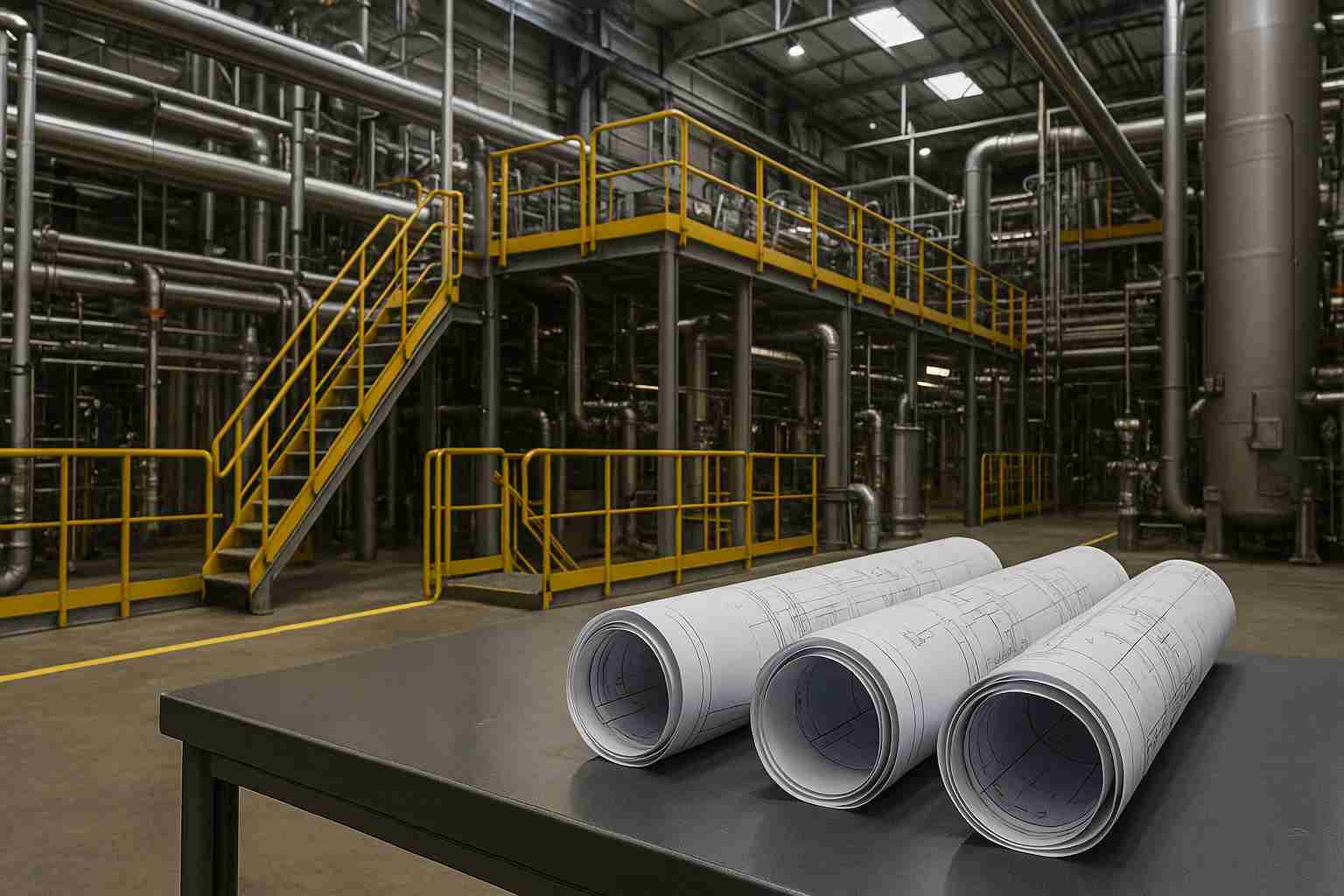
In theindustrial engineering design is not a simple technical activity, but a progressive process that accompanies the entire development of plants, machines and production systems, from initial definition to commissioning. Its function is to transform functional requirements and operational constraints into feasible, verifiable and startable technical solutions in a controlled manner.
Regardless of the contractual or organizational model adopted, each industrial project crosses three levels of design recognised in international engineering practice: preliminary design, basic design and detail design (or executive). These levels do not represent arbitrary phases, but technical maturity of the project, which allow to gradually reduce uncertainty before decisions become irreversible in terms of costs, times and buildability.
Design as a progressive definition process
In an industrial project each technical decision directly influences supply, construction, safety and reliability of the final system. Dealing with design as one activity means moving the risk to the most expensive stages of the project, where changes become complex and honest.
The subdivision in levels allows instead of stabilize the project in a progressive way, making decisions more critical when the cost of change is still contained. This principle is consistent with systems engineering and consolidated practices of mechanical design, plant engineering, electrical and automation, and is the basis of all well-governed industrial projects.
Preliminary design: technical perimeter definition
The preliminary design represents the first level of technical structure of the project. At this stage, engineering operates at a conceptual level, with the aim of defining the perimeter of the system and evaluating the possible solution alternatives according to the existing production objectives and constraints.
Operating requirements, regulatory and plant constraints, installation conditions and main interfaces with the existing environment are analysed. The results take the form of general layouts, functional patterns of principle and cost indicative estimates, useful to correctly set requirements and support initial decisions. The quality of this phase is decisive, because conceptual errors not identified here would emerge only in the most expensive phases of the project.
Basic design: definition of system architecture
The basic design, also known as Basic Engineering or FEED (Front End Engineering Design), represents the transition from concept to technical architecture of the system. At this stage the requirements are translated into a defined and coherent configuration, in which disciplines begin to converge in a structured manner.
Comprehensive functional patterns, consistent plant layouts, preliminary dimensions, interface definition and automation and safety criteria are developed. The project becomes measurable, planned and verifiable, allowing reliable estimates of time, costs and supplies. Basic design ends with design freeze, i.e. the freezing of technical architecture, which allows to safely start both the design of detail and the supply activities, reducing the risk of late variants.
Design of detail and executive: building and starting
The design of detail, or executive design, is the level in which the project is fully constructed, installed and tested. At this stage each component and subsystem is uniquely defined, eliminating ambiguities and interpretations.
Constructive drawings, distinct materials, electrical schematics and tires, final layouts, software logic and documentation for testing and safety are produced. These processes are the unique reference for construction, installation and commissioning. The quality of the executive design directly determines the fluidity of the operational phases and the reliability of the operating system.
Project design and lifecycle relationships
| Design level | Role in life cycle |
|---|---|
| Previous design | Definition of technical perimeter and alternatives |
| Basic design (FEED) | System architecture and decision stabilization |
| Design of detail | Construction, installation and commissioning |
This report highlights how design is not an isolated phase, but a continuous flow that accompanies the project until the start of the production system.
Operating Note: from design to controlled execution
In industrial practice, design levels work fully only if they are governed as a unique flow between disciplines and phases. What is defined in preliminary and consolidated design in basic design must remain consistent until the execution process, and must be directly usable in subsequent activities, from technical alignment with suppliers to installation, testing and start-up support.
It is this integrated approach that allows you to maintain technical control throughout the project life cycle. In Emmetitech we apply this logic as a working method, integrating mechanical, electrical, automation and safety design with the predominate of technical interfaces until commissioning, so that the design does not remain documentation, but becomes governed execution.
Multidisciplinary integration and technical continuity
Each level of design involves all technical disciplines with a growing degree of detail. Conceptual choices become defined architectures, generic layouts are transformed into constructive planes and functional logic evolve into executive control software.
Information continuity between levels ensures technical consistency, reduces the risk of inconsistencies and allows to face construction and start-up with a system already stabilized and verified.
Conclusion
The three levels of industrial design are not a bureaucratic sequence, but a methodological structure of control of technical complexity. Governing them correctly allows you to anticipate critical decisions, reduce project risk and ensure continuity between design, construction and commissioning.
The quality of an industrial plant does not depend on how much it corrects in the yard, but on how well it is designed before.